
Picture your everyday lunchtime sandwich. Bread, a filling you enjoy and some mayonnaise are often all it takes. What changes if you want to lower your carbohydrate intake?
The fillings might stay exactly the same, but changing the slices could make a considerable difference. For those exploring a keto-friendly approach, understanding what goes into those two slices is a useful place to start.
Comparing Bread Using Your Usual Sandwich
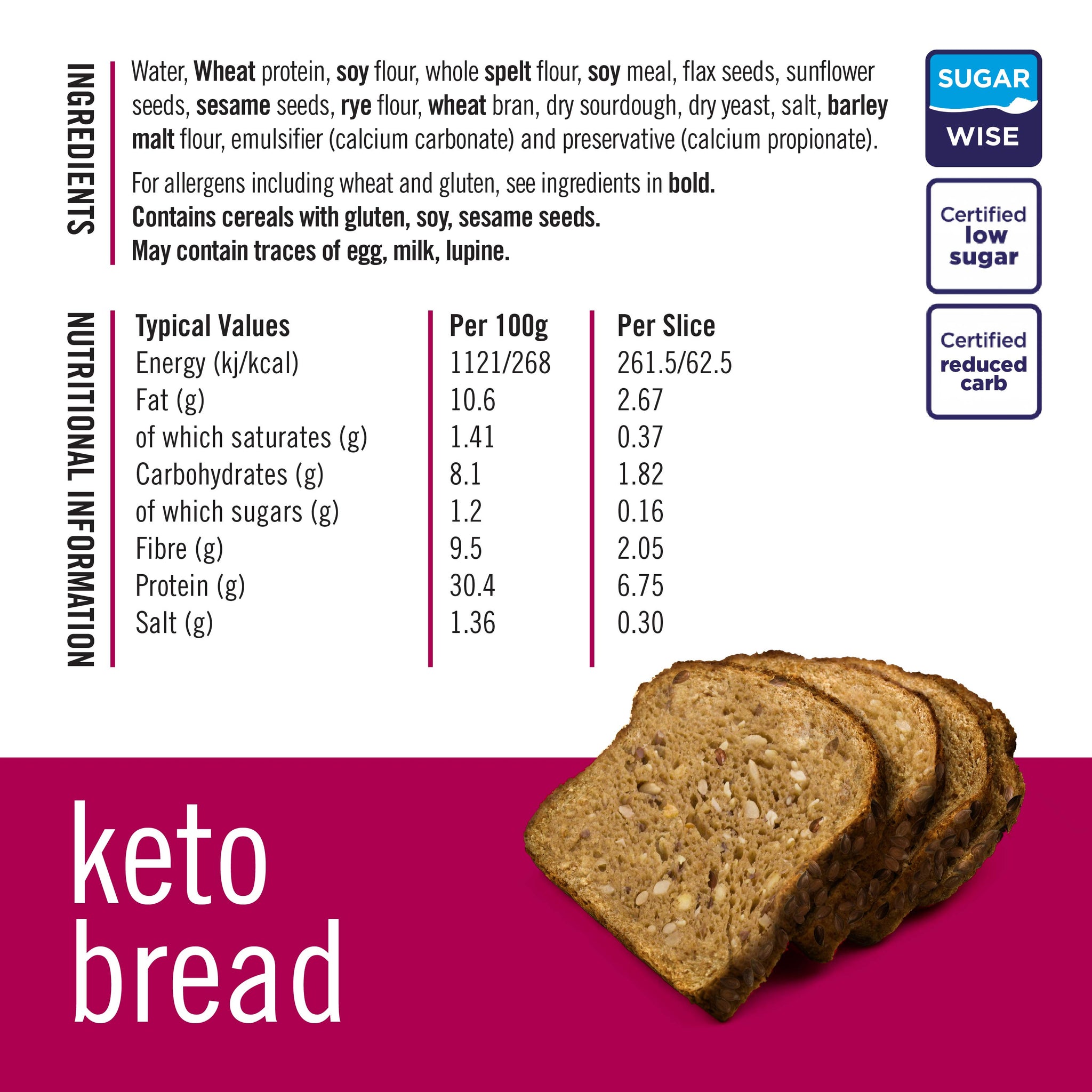
Image credit: fitbakes.co.uk
Comparing products while searching for the lowest bread carbs is not always simple. Some loaves advertise carbohydrates per slice, while others highlight figures per 100g. The most useful comparison often starts with your typical meal. For a sandwich made with two slices, add up the carbohydrates in the two slices before considering the wrap filling.
This makes it easier to examine products based on what you really eat as opposed to an advertised number. Fitbakes Seeded Low Carb Loaf is marketed as containing 0.8g net carbohydrates per slice, equivalent to approximately 1.6g net carbohydrates for two slices. Because the item page also shows a 2g carbohydrate claim, it is sensible to check the latest label.
Understanding the Difference With Keto Bread
A common question about bread and keto is whether eating bread is something to avoid altogether. Much of the carbohydrate in conventional wheat bread comes from starch. To reduce carbohydrates while retaining a bread-like result, keto-friendly loaves use other ingredient combinations.
A keto-friendly label should not be taken to mean that the bread is carbohydrate-free. Your total intake also depends on how much you eat, spreads, sandwich fillings and other food throughout the day. A sandwich made with lower-carb bread could make it easier to plan the rest of the meal you make.
What Seeds and Protein Add to the Loaf
Carbohydrate content is not the only reason to choose an alternative loaf. Fitbakes describes its seeded bread as containing 7g protein per slice and 17% seeds, including golden linseeds and sunflower seeds. Its manufacturer-reported energy value is 63 calories for each slice. The seeds add flavour and bite; protein also plays an important role in normal body maintenance.
While comparing bread with low carbohydrates, consider these nutritional characteristics alongside the ingredients and allergen information. A particular product’s suitability depends on your personal dietary requirements, not simply its carbohydrate count.
Making Toast With Low-Carbohydrate Bread
People sometimes wonder whether lower-carb alternatives can be satisfying. Compared with ordinary supermarket bread, some carb-conscious loaves offer a distinct bite. Fitbakes recommends toasting its Seeded Low Carb Loaf to put together a nutty, golden result. Try serving it with scrambled eggs for breakfast or preparing an open sandwich with avocado, tomatoes, and your preferred seasoning.
Bread with low carbs can also accompany soup or provide a convenient base for a quick lunch. You do not need to reinvent every meal; familiar ways to serve bread may make changes more manageable.
Check the Bread Label Before You Buy
The front of the pack does not tell the whole story about carbs in low carb bread; the details deserve a look. Check the serving size, carbohydrate information, protein, fibre, and ingredient list. UK nutritional labels generally report carbohydrates separately from fibre, whereas some international products use different conventions.
When net carbohydrates appear in marketing, compare the stated number with all the nutritional details. This is particularly useful while comparing products with different-sized slices.
A Simple Approach to Lower-Carb Meals
Lower-carbohydrate eating does not have to involve completely changing the meals you enjoy. By choosing a suitable alternative to ordinary bread, you may be able to continue enjoying your usual breakfasts and lunches with another carbohydrate total.
Fitbakes Seeded Low Carb Loaf offers one such option, combining a seeded recipe with low carbohydrate and high protein figures reported by the manufacturer. Choose bread based on your nutritional needs, how much you enjoy it and how well it fits the meals you actually make.